Aluminium Machine Components
  • Home
  • Aluminium Machine Components

Top Aluminium Machine Component Manufacturers in Pune

Top Aluminium Machine Component Manufacturers in Pune by Renuka Auto Cast
whatsapp-now
enquire-now

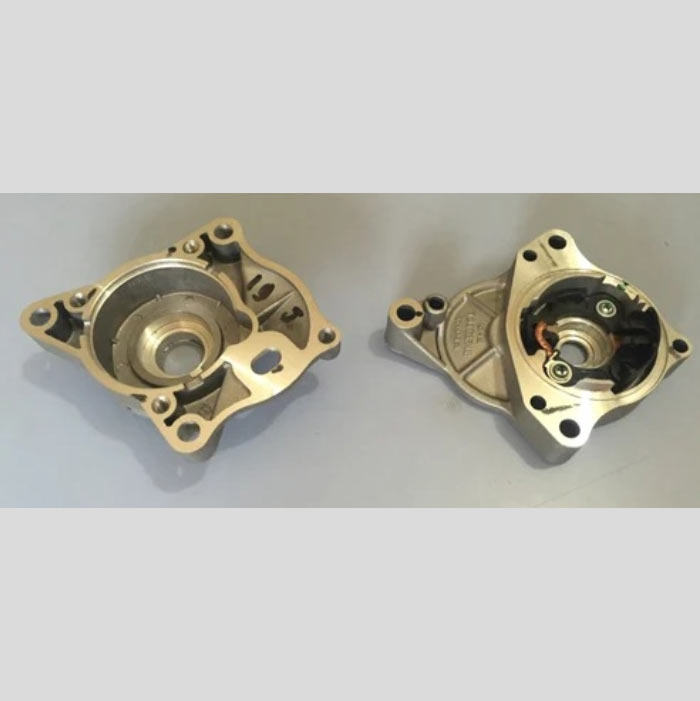
Renuka Autocast is leading Aluminium Machine Component Manufacturers, Suppliers and Exporters in Pune. Aluminium Machine Components are engineered parts manufactured from aluminium and its suitable alloys for applications where low weight, machinability, dimensional consistency, and functional performance are important. Aluminium is widely used in modern engineering because it combines relatively low density with useful strength, corrosion resistance, and good machinability.

These components can be manufactured through CNC turning, milling, drilling, boring, tapping, and other precision machining operations. Aluminium components may also originate from cast parts that are subsequently machined to achieve final dimensions and functional surfaces.

From equipment housings and solid blocks to specialised automotive and industrial parts, aluminium machining provides manufacturers with flexibility in component design and production. The appropriate machining method depends on the geometry, alloy, tolerances, surface requirements, and intended application.

Types of Aluminium Machine Components

As we are leading Aluminium Machine Component Manufacturers in Pune, our Types are designed to meet different application requirements and industry standards, including the following types:

  • Aluminum Machined Parts Machined aluminium parts are produced by removing material from a solid, cast, or semi-finished workpiece. CNC-controlled operations can create accurate holes, slots, profiles, threads, pockets, and mounting surfaces.
  • CNC Aluminum Machined Parts CNC machining provides programmed control over cutting movements and machining sequences. It is suitable for producing repeatable aluminium parts for both individual requirements and production batches.
  • Aluminum CNC Components These components are manufactured using computer-controlled machining equipment according to engineering drawings or CAD models. They can range from relatively simple brackets to components with multiple precision features.
  • Custom Aluminum Machined Parts Custom parts are developed according to customer-specific dimensions, drawings, material specifications, and functional requirements. This approach is useful when standard components cannot meet the requirements of a particular machine or assembly.

Detailed Process Description

  • Component and Drawing Review: The component drawing or CAD model is examined to identify critical features, dimensional requirements, tolerances, and functional surfaces. This information helps determine the machining sequence, tooling requirements, and inspection criteria.
  • Workpiece Setup and Positioning: The aluminium workpiece is securely positioned using a suitable fixture or work-holding arrangement. Accurate positioning establishes the required reference points and helps maintain the relationship between different machined features.
  • Machining Operations: Depending on the component design, multiple machining operations may be performed. Face milling can create flat reference surfaces, while end milling is used for profiles, pockets, and slots. Drilling and tapping produce holes and threaded features, while boring can be used where controlled internal dimensions are required.
  • Tool Selection and Cutting Parameters: Cutting tools and machining parameters are selected according to the aluminium alloy, component geometry, machining operation, and required surface finish. Appropriate cutting conditions help maintain dimensional accuracy while achieving the desired surface quality.
  • Chip Evacuation and Tool Management: Effective chip evacuation is important during aluminium machining because the material can produce chips that may interfere with the cutting process. Proper tool selection, coolant or lubrication where applicable, and tool-condition monitoring help maintain stable machining performance.
  • Deburring and Inspection: After the main machining operations are completed, components are deburred to remove unwanted sharp edges and machining residues. Critical dimensions are then measured using suitable inspection equipment and compared with the applicable engineering requirements.
  • Surface Finishing and Final Inspection: Additional processes such as anodising, coating, polishing, or other surface treatments can be performed when required by the application. A final inspection verifies dimensional accuracy, surface condition, and overall component quality before dispatch.

Technical Specifications of Aluminium Machine Components

As a trusted Aluminium Machine Component Suppliers in Pune, we serve businesses across various industries that meet professional visual communication requirements.

Parameter Specification / Consideration
Material Aluminium and suitable aluminium alloys
Manufacturing Process CNC Turning, Milling and Machining
Machining Operations Milling, drilling, tapping, boring and profiling
Component Design Customer drawing or CAD model
Production Prototype, batch and production quantities
Component Types Housings, blocks, brackets, covers and engineered parts
Dimensional Control Application-specific tolerances
Surface Finish Based on component requirements
Inspection Dimensional and visual inspection
Secondary Operations Deburring, finishing and other required processes
Applications Automotive, industrial, engineering and aerospace

Features and Benefits of Aluminium Machine Components

As Aluminium Machine Component Exporters in Pune, our products provide several Features and Benefits including consistent quality, smooth finish, and long service life.

Feature Benefit
Lightweight material Helps reduce overall component weight
Good machinability Supports efficient and controlled machining operations
CNC-controlled production Provides repeatable and consistent manufacturing
Design flexibility Allows production of components with complex geometries
Detailed feature machining Enables production of detailed profiles, holes, pockets, slots, and other features
Precision fixture selection Helps maintain accurate component positioning during machining
Optimised tool geometry Supports stable cutting performance and consistent component quality
Controlled cutting conditions Helps achieve required dimensions and surface finish
Dimensional inspection Supports verification of critical component dimensions and tolerances
Post-casting machining Allows critical dimensions, mounting surfaces, holes, and threads to be machined accurately on cast aluminium components
Surface finishing capability Allows additional treatments such as anodising, coating, polishing, or other finishes where required
Reduced secondary operations Good machinability can help minimise unnecessary additional machining processes
Consistent batch production Helps maintain uniformity between components across production batches
Custom CAD-based manufacturing Supports production based on customer drawings, CAD models, prototypes, and engineering specifications

Applications of Aluminium Machine Components

As Aluminium Machine Component Manufacturers in Pune, our all types are used in various types of industrial sectors such as:

  • Automotive Machinery and Assemblies: Aluminium machined components are used for brackets, housings, covers, mounting parts, and other automotive assemblies. Their lightweight nature can help reduce component weight while maintaining suitable mechanical performance.
  • Industrial Equipment: Aluminium parts are incorporated into industrial machinery, processing equipment, and mechanical systems where reduced weight and good machinability are beneficial. Components can be manufactured according to specific engineering drawings and dimensional requirements.
  • Machine Housings: Aluminium is commonly used for equipment and machine housings where lightweight construction and accurate machining are required. CNC machining can produce mounting surfaces, holes, pockets, and other functional features.
  • Motor and Equipment Covers: Machined aluminium covers can be used to protect motors, gear assemblies, electrical equipment, and other machinery. Accurate dimensions support proper fitting and assembly with mating components.
  • Mounting Brackets: Aluminium brackets are suitable for mounting sensors, equipment, motors, panels, and other mechanical elements. CNC machining allows holes, slots, and mounting surfaces to be produced with controlled dimensions.
  • Mechanical Assemblies: Aluminium components can be incorporated into mechanical assemblies requiring lightweight parts and accurately positioned features. Suitable machining methods help maintain consistent dimensions across production batches.
  • Automation Equipment: Aluminium machine components are widely applicable in automated machinery, fixtures, frames, mounting structures, and motion systems. Their low weight and machinability can support efficient equipment design and assembly.
  • Aerospace and Aeronautical Equipment: Aluminium components are used in selected aerospace and aeronautical applications where weight reduction is an important design consideration. Material selection, machining processes, inspection, and applicable engineering requirements are determined according to the specific application.
  • Electrical Equipment: Aluminium machined parts can be used for electrical equipment housings, covers, mounting components, heat-related structures, and mechanical supports. The material can provide a useful combination of low weight and machinability.
  • Engineering Machinery: Aluminium components are suitable for various engineering machines, specialised equipment, and mechanical systems. Custom machining allows profiles, holes, threads, pockets, and other features to be produced according to design requirements.

Renuka Autocast is leading Aluminium Machine Component Manufacturers, Suppliers and Exporters in Pune. Aluminium Machine Components provide a practical manufacturing solution for applications requiring lightweight construction, controlled dimensions, and flexible component design. CNC machining enables manufacturers to produce a wide range of aluminium parts with features such as holes, slots, pockets, threads, profiles, and precision mounting surfaces. Aluminum Machining Services can support different production requirements, from prototype and customised parts to recurring OEM programs. With suitable material selection, machining strategies, tooling, work holding, and inspection, aluminium components can be manufactured to meet the functional and dimensional requirements of modern industrial equipment.

Location
email call whatsapp