
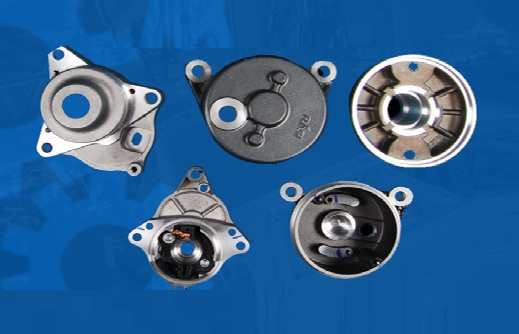
Renuka Auto Cast Tech Pvt. Ltd. specializes in high-quality Aluminium Gravity Die Casting solutions as leading Aluminium Gravity Die Casting Manufacturers in India , ideal for producing robust, durable, and precise components. This method leverages gravity to fill moulds, resulting in excellent mechanical properties and smooth finishes, making it suitable for automotive, industrial, and electrical applications.
Gravity die casting sits alongside our Aluminium Die Casting capability as one of the core casting routes we offer, chosen when a component's wall thickness, structural requirement or heat-treatment need makes it the more suitable process against high pressure die casting.
What is Aluminium Gravity Die Casting?
Aluminium gravity die casting is a manufacturing process in which molten aluminium alloy is poured into a reusable, permanent steel mould and allowed to fill the cavity under gravity rather than injection pressure. Because the metal fills the mould calmly, gravity die casting typically produces denser castings with lower gas porosity than high pressure die casting, giving components better mechanical properties and, in many cases, the ability to be heat treated.
Gravity die casting is generally selected for medium to large components, relatively thicker wall sections, and applications where structural integrity and dimensional accuracy matter more than the very high cycle speeds offered by Aluminium Pressure Die Casting Manufacturers in India . Where a component needs both approaches evaluated, our engineering team compares wall thickness, annual volume, alloy and mechanical requirements before recommending a casting route.
How Does the Aluminium Gravity Die Casting Process Work?
A controlled manufacturing sequence maintains repeatability from mould preparation through final inspection. The typical aluminium gravity die casting process includes:
-
1. Component DFM Review: The 3D CAD model and 2D drawing are reviewed for wall thickness, draft, parting line, undercuts, machining allowance and critical functional features.
-
2. Alloy Selection: The aluminium alloy is selected according to the required strength, corrosion resistance, heat-treatment potential and application requirements.
-
3. Mould Preparation: The permanent steel mould is cleaned, coated and brought to the required operating temperature before pouring.
-
4. Gravity Pouring: Molten aluminium is poured into the mould and fills the cavity under gravity, with low turbulence supporting a dense, sound casting.
-
5. Cooling and Solidification: Controlled thermal conditions support directional solidification, dimensional accuracy and internal soundness.
-
6. Casting Removal and Trimming: The casting is removed from the mould and risers, runners and flash are removed.
-
7. Machining and Secondary Operations: Critical bores, threads, sealing faces and mounting surfaces can be precision machined according to drawing requirements.
-
8. Inspection and Testing: Dimensional inspection, material verification, surface inspection and other specified quality checks are performed according to component requirements.
Aluminium Gravity Die Casting Manufacturing Capabilities
Our integrated manufacturing approach covers casting, tooling, machining, finishing and inspection, so customers can develop a finished component through a single manufacturing programme rather than coordinating multiple vendors.
| Capability | Manufacturing Scope |
|---|---|
| Gravity Die Casting | Aluminium gravity die casting for medium to large, structurally loaded components |
| Die & Tool Development | DFM review, mould design, gating and cooling development supported through our Die Design & Manufacturing capability |
| Aluminium Alloys | Alloy selection based on strength, castability, corrosion resistance and heat-treatment requirements |
| CNC & VMC Machining | Precision machining of bores, threads, sealing faces and mounting surfaces via our CNC components manufacturing and VMC components manufacturing capabilities |
| Surface Finishing | Shot blasting, deburring and Powder Coating Services for corrosion protection and cosmetic finish |
| Quality Inspection | Dimensional inspection, CMM, material verification, surface inspection and leak testing as required |
Key Features of Our Aluminium Gravity Die Casting
- High-strength, defect-free castings
- Precise dimensional accuracy
- Smooth surface finish requiring minimal machining
- Energy-efficient and eco-friendly casting process
- Ideal for medium to large components
Aluminium Gravity Die Casting Moulds and Tooling
Mould design has a direct influence on casting quality, cycle consistency, dimensional repeatability and tooling life. Our engineering approach considers the component design, gating, riser placement and thermal balance before production tooling is finalised.
For customers requiring dedicated tooling support, our Die Design & Manufacturing capability supports the development of production-ready gravity die casting tooling, and our Pressure Die Casting Tools capability is available where a programme also requires HPDC tooling for related components.
CNC Machining of Aluminium Gravity Die Cast Components
Aluminium gravity die castings provide a smooth, near-net-shape surface, while precision machining establishes the final dimensions of critical functional features. Our precision machined components and spindle machining components capabilities support bores, threads, sealing faces and locating features, while broader machining requirements can be handled through our aluminium machine components service.
Why Choose Renuka Auto Cast Tech Pvt. Ltd. for Gravity Die Casting?
Our expertise in Aluminium Gravity Die Casting and aluminium die casting manufacturing ensures high-performance solutions for diverse industries. We combine advanced technology, skilled engineering, and strict quality control to meet global standards.
- Expertise in producing complex aluminium components
- Stringent quality inspection for reliable performance
- Customized solutions based on client requirements
- Experienced in automotive, industrial, and electrical sectors
- Timely delivery with competitive pricing
Applications of Aluminium Gravity Die Casting
Our aluminium gravity die casting solutions are suitable for components used across multiple engineering and manufacturing industries, including complementary requirements met by our Aluminium Pressure Die Casting Parts range where a programme uses both casting routes.
-
Automotive: Structural brackets, gearbox and pump housings, suspension-related components and other load-bearing aluminium parts.
-
Industrial Machinery: Pump bodies, gear housings, engineering brackets and fluid-handling components requiring dense, sound castings.
-
Electrical: Enclosures and housings where dimensional accuracy and mechanical strength are functional requirements.
-
General Engineering: Custom aluminium housings, covers and structural components manufactured to customer drawings.
As one of the reliable Aluminium Die Casting Manufacturers in India , we are committed to delivering durable, high-precision casting solutions that improve product performance and longevity.
Trust Renuka Auto Cast Tech Pvt. Ltd. for world-class Aluminium Gravity Die Casting solutions. Share your 3D CAD model, 2D drawing, aluminium alloy specification, annual production volume and any machining or finishing requirements — our engineering team will review the component and get back to you with a competitive quote.
FAQ's: Aluminium Gravity Die Casting
Aluminium gravity die casting (GDC) is a manufacturing process in which molten aluminium alloy fills a reusable steel mould under gravity rather than injection pressure. The calmer, low-turbulence filling produces dense, high-strength castings with good mechanical properties, making GDC suitable for medium to large structural and automotive components.
Gravity die casting fills the mould using gravity alone, producing denser, heat-treatable castings with fewer gas-porosity defects, and suits medium to large or structurally loaded components. Pressure die casting injects metal at high velocity, giving faster cycle times and thinner walls, and suits high-volume, complex, thin-section components. The right process depends on component geometry, volume, alloy and mechanical requirements.
Aluminium gravity die casting is widely used in automotive, industrial machinery and electrical applications, including structural brackets, pump and gear housings, suspension-related components, and enclosures where mechanical strength and dimensional accuracy are important.
Yes. Because gravity die casting produces denser castings with lower gas porosity than high pressure die casting, gravity die cast components are generally more suitable for heat treatment (such as T6) where the application requires enhanced mechanical performance.
Gravity die casting produces a smooth surface finish and good dimensional accuracy, which reduces machining requirements. Where critical features such as bores, threads, sealing faces or mounting surfaces require final tolerance, CNC or VMC machining is used to complete the component.
Alloy selection for gravity die casting depends on the required mechanical properties, corrosion resistance and heat-treatment needs of the component. Alloys with good fluidity and strength characteristics are typically selected in consultation with the customer's application requirements.
Provide a 3D CAD model or 2D drawing, the required aluminium alloy, annual production volume, critical dimensional and mechanical requirements, and any machining, surface finishing or inspection requirements. Our engineering team reviews these details to recommend the appropriate casting route and provide a quotation.
Renuka Auto Cast Tech Pvt. Ltd. operates from Bhosari in the Pune industrial region of Maharashtra, India, supplying aluminium gravity die castings across India and supporting international supply requirements.