
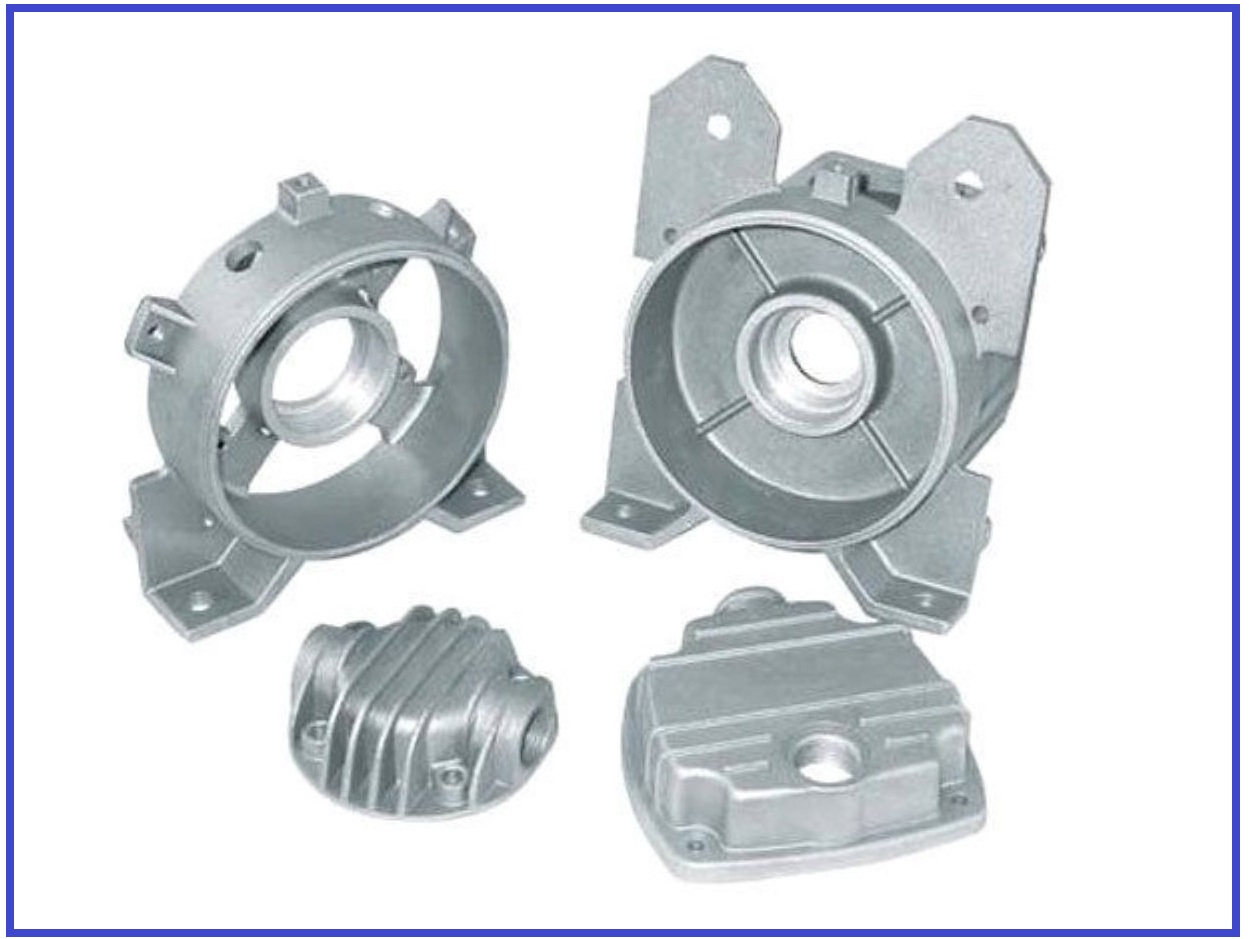
Renuka Auto Cast Tech Pvt. Ltd. provides precision Aluminium Die Casting and pressure die casting solutions for automotive, electric vehicle, electrical, electronics and industrial applications. Our aluminium pressure die casting process is designed to produce lightweight, dimensionally consistent and complex components with repeatable quality and efficient production cycles.
Aluminium pressure die casting is particularly suitable for components requiring complex geometries, thin-wall sections, integrated ribs and bosses, good surface finish and high-volume production. Depending on component geometry, production volume, alloy and functional requirements, the appropriate casting route is selected during the engineering and DFM review.
What is Aluminium Pressure Die Casting?
Aluminium pressure die casting is a manufacturing process in which molten aluminium alloy is injected into a precision steel die under controlled pressure and velocity. The process enables the production of near-net-shape components with complex features, consistent dimensions and reduced machining requirements.
The selection of die design, gating, runner, overflow, venting, temperature control and injection parameters directly influences filling behaviour, surface quality, dimensional stability and internal casting integrity. For critical features such as bores, threads, sealing faces and mounting surfaces, post-casting precision machining can establish the required final dimensions.
How Does the Aluminium Pressure Die Casting Process Work?
A controlled manufacturing sequence helps maintain repeatability from tooling development through final inspection. The typical aluminium pressure die casting process includes:
-
1. Component DFM Review: The 3D CAD model and 2D drawing are reviewed for wall thickness, draft, parting line, undercuts, machining allowance and critical functional features.
-
2. Alloy Selection: The aluminium alloy is selected according to the required strength, castability, machinability, thermal performance and application requirements.
-
3. Die Preparation: The die is cleaned, lubricated and brought to the required operating condition before production.
-
4. Molten Aluminium Injection: Molten aluminium is injected into the steel die at controlled pressure and velocity to fill the required cavity geometry.
-
5. Cooling and Solidification: Controlled thermal conditions support stable solidification and dimensional consistency.
-
6. Casting Removal and Trimming: The casting is ejected from the die and runners, overflows and flash are removed.
-
7. Machining and Secondary Operations: Critical bores, threads, sealing faces and mounting surfaces can be precision machined according to drawing requirements.
-
8. Inspection and Testing: Dimensional inspection, material verification, surface inspection, leak testing and other specified quality checks are performed according to component requirements.
Aluminium Pressure Die Casting Manufacturing Capabilities
Our integrated manufacturing approach covers casting, tooling, machining, finishing and inspection so that customers can coordinate the development of a finished component through a single manufacturing programme.
| Capability | Manufacturing Scope |
|---|---|
| Pressure Die Casting | Aluminium pressure die casting for complex and production-oriented components |
| Machine Range | 120T to 900T die casting machine range for different component sizes and production requirements |
| Die & Tool Development | DFM review, die design, gating, cooling, tooling development and trial validation |
| Aluminium Alloys | Alloy selection based on component geometry, castability, strength and application requirements |
| CNC Machining | Precision machining of bores, threads, sealing faces, mounting surfaces and datum features |
| Surface Finishing | Shot blasting, deburring, powder coating and specified surface treatments |
| Quality Inspection | Dimensional inspection, CMM, X-ray, alloy verification, surface inspection and leak testing as required |
120T to 900T Aluminium Die Casting Machine Range
Renuka Auto Cast Tech operates a 120T to 900T die casting machine range to support different component sizes, geometries and production requirements. This machine range forms an important part of our aluminium pressure die casting capability for automotive, EV, electrical and industrial components.
Machine selection is considered according to component geometry, projected area, die requirements, production volume and process parameters. This helps establish a suitable production route rather than applying the same machine configuration to every component.
Aluminium Pressure Die Casting Dies and Tooling
Tool design has a direct influence on casting quality, cycle consistency, dimensional repeatability and tooling life. Our engineering approach considers the component design before production tooling is finalised.
The tooling development process can include component DFM, parting line evaluation, gating and runner development, overflow and venting considerations, cooling-channel planning, ejection requirements, machining allowance and trial casting validation.
For customers requiring dedicated tooling support, our Die Design & Manufacturing capability supports the development of production-ready casting tooling.
Quality Control in Aluminium Pressure Die Casting
Casting quality depends on the complete manufacturing process rather than final inspection alone. Die condition, melt quality, filling parameters, venting, thermal management, tooling condition and machining strategy all contribute to the final component quality.
-
Dimensional Inspection: Verification against customer drawings and specified dimensional requirements.
-
CMM Inspection: Measurement of critical features and dimensional characteristics where required.
-
X-Ray Inspection: Internal inspection of critical components where radiographic evaluation is specified.
-
Leak Testing: Pressure-tight components can be evaluated against defined test methods and acceptance criteria.
-
Material Verification: Aluminium alloy composition can be checked against the specified material requirement.
-
Surface Inspection: Surface condition and specified finishing requirements are checked before dispatch.
Pressure-Tight Aluminium Die Castings
Aluminium pressure die casting can be used for applications where pressure tightness is an important functional requirement. Such components require appropriate attention to die venting, gating, overflow configuration, filling parameters, melt quality, thermal management and machining of sealing surfaces.
Depending on the component specification, pressure-tight castings may be used for pump housings, hydraulic components, valve bodies, fluid handling components, electrical enclosures and EV-related housings. The required leak-test method and acceptance criteria should be established according to the customer's component specification.
CNC Machining of Aluminium Pressure Die Cast Components
Aluminium pressure die castings provide near-net-shape geometry, while precision machining can establish the final dimensions of critical functional features. Our CNC components manufacturing capability can support machining requirements such as bores, threads, sealing faces, mounting surfaces and locating features.
For components requiring broader machining capabilities, customers can also utilise our VMC components manufacturing and aluminium machine components capabilities.
Key Benefits of Aluminium Pressure Die Casting
- Complex component geometries can be produced in near-net shape
- Suitable for high-volume production programmes
- Lightweight aluminium components with useful mechanical properties
- Good dimensional repeatability when the process and tooling are properly controlled
- Integrated ribs, bosses and other cast-in features can reduce part count
- Reduced machining requirements for suitable component designs
- Suitable surface quality for specified finishing and coating processes
- Efficient production for automotive, EV, electrical and industrial applications
Applications of Aluminium Pressure Die Casting
Our aluminium pressure die casting solutions are suitable for components used across multiple engineering and manufacturing industries.
-
Automotive: Motor housings, transmission and gearbox housings, covers, brackets, brake-related components and other aluminium components.
-
Electric Vehicles: Motor housings, inverter housings, controller enclosures, battery-related components and thermal-management components.
-
Electrical & Electronics: Electrical enclosures, terminal housings, telecom housings, heat-dissipating components and junction boxes.
-
Industrial Machinery: Pump housings, valve bodies, gearbox housings, machine brackets, compressor housings and industrial enclosures.
-
Lighting: LED housings, heat-dissipating bodies and driver enclosures.
-
General Engineering: Custom aluminium housings, covers, mounting components and engineered die cast parts manufactured according to customer drawings.
Integrated Aluminium Casting and Component Manufacturing
Pressure die casting is often only one stage of a complete component manufacturing requirement. Renuka Auto Cast Tech supports related operations including Pressure Die Casting Tools , precision machining, aluminium machine components and specified finishing operations.
Where required, finished components can be evaluated across casting, machining, surface treatment and inspection requirements to reduce coordination between multiple manufacturing suppliers.
Why Choose Renuka Auto Cast Tech for Aluminium Pressure Die Casting?
- Integrated die casting, tooling, machining and inspection capabilities
- 120T to 900T die casting machine range
- Engineering-led DFM and casting process evaluation
- Experience across automotive, EV, electrical and industrial applications
- Support for complex aluminium die cast components
- Dimensional, material, internal and leak-testing capabilities according to component requirements
- Manufacturing facilities located in the Pune industrial region
Aluminium Pressure Die Casting for OEM and Industrial Components
Renuka Auto Cast Tech Pvt. Ltd. provides aluminium pressure die casting solutions for customers looking for controlled casting, tooling, machining and inspection under an integrated manufacturing programme. Our approach considers component geometry, alloy, production volume, dimensional requirements, pressure tightness, machining and finishing requirements before selecting the manufacturing route.
To discuss your requirement, share your 3D CAD model, 2D drawing, aluminium alloy specification, annual production volume, machining requirements and required inspection or leak-testing criteria. Our engineering team can review the component requirements and evaluate the appropriate aluminium pressure die casting route.